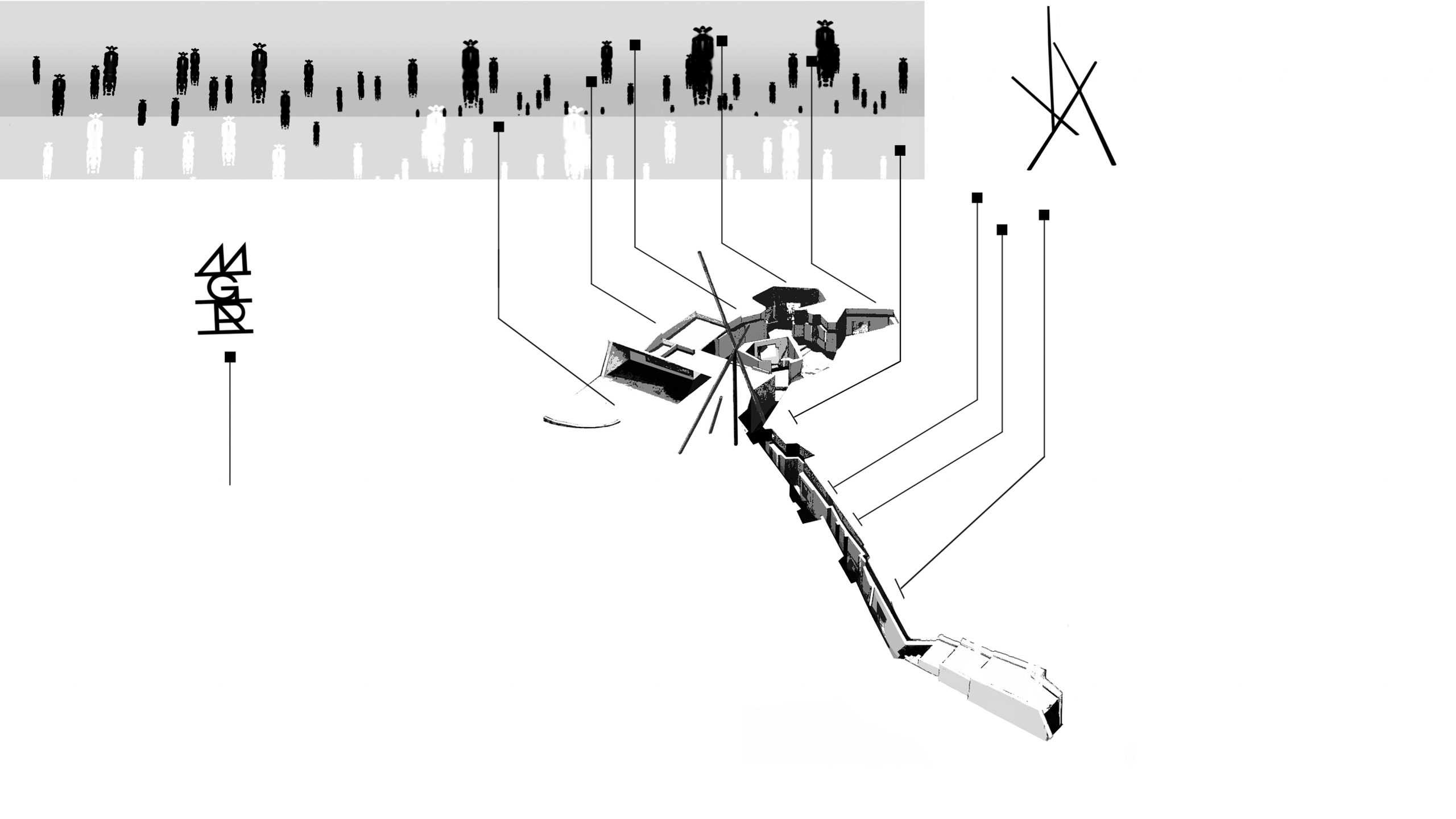
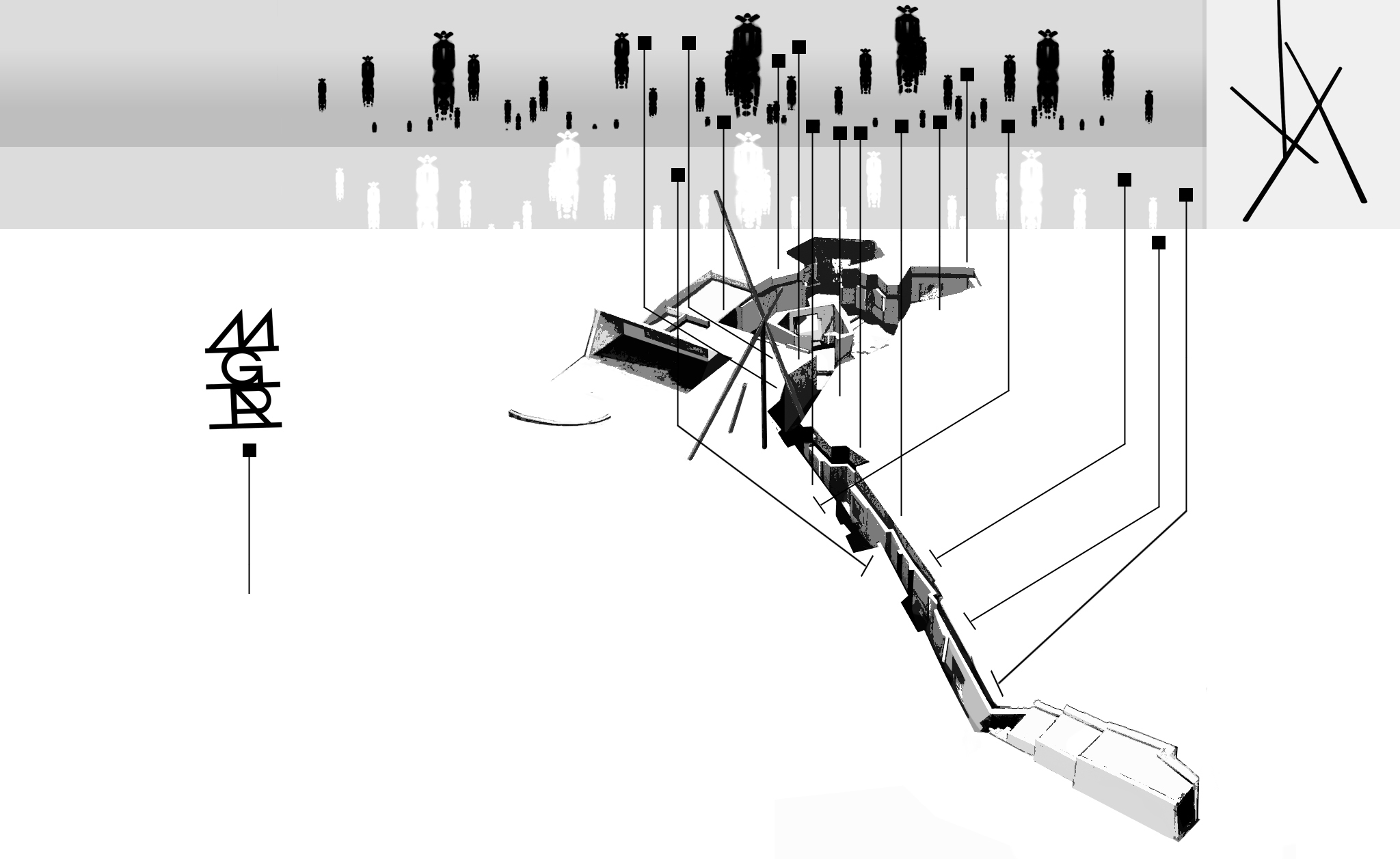
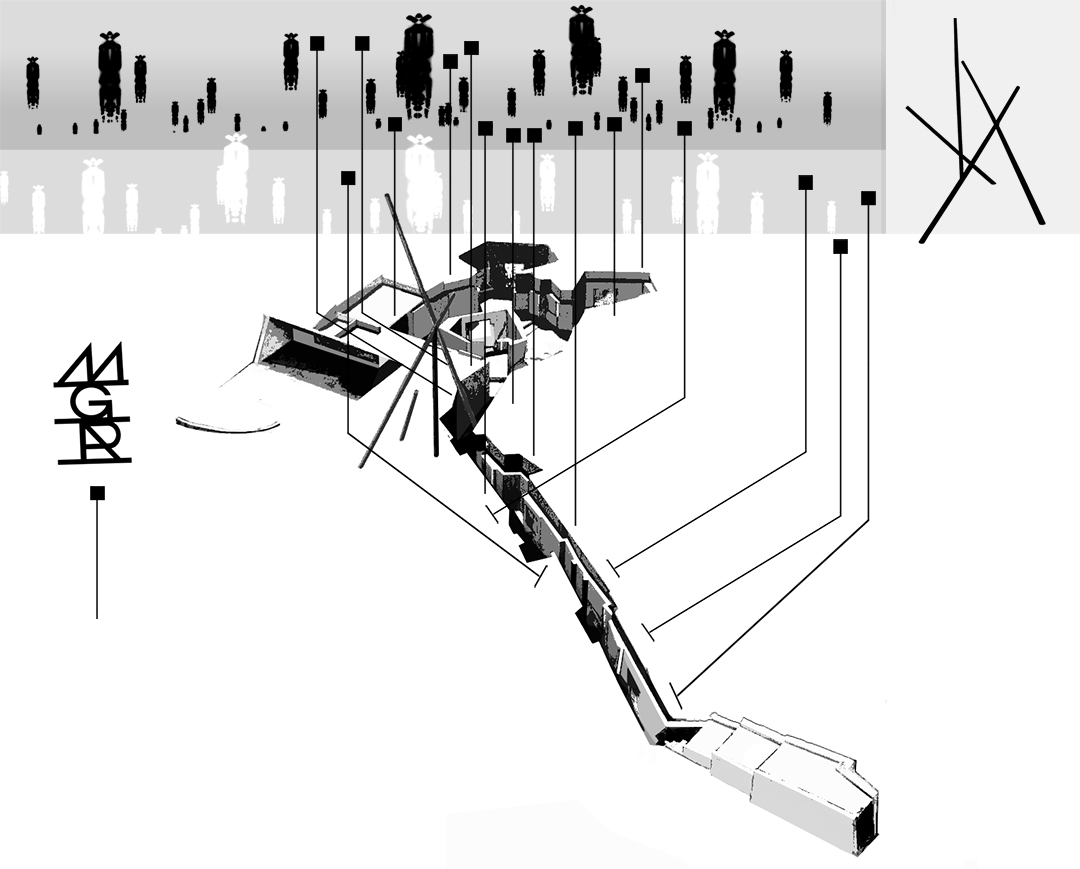
people of the shadow
people of light
<seen, not taken.>
<without noise, without bloodshed.>
Intention
The artist YIIH<++ symbolically takes over the Monument to the Glory of the Resistance with a site-specific work—a visual tribute to all forms of resistance.
The piece transforms the memorial into a living space for inquiry.
Created in the 1970s by the Atelier des Architectes Associés in collaboration with artists, scientists, and engineers, this unconventional underground memorial—designed as a journey—commemorates the spirit of resistance during the Nazi occupation.
Its modern concrete architecture belongs to the Brutalist movement, lending the monument an experimental, avant-garde character.
Artist YllH<++ takes over the Monument to the Glory of the Resistance with a series of in situ installations that bring memory, resistance and contemporary creation into dialogue, between the visible and the invisible. A visual tribute to all forms of resistance.
From the perspective of the Allées Frédéric Mistral, a monumental installation dominates the landscape and accompanies visitors towards the entrance of the monument. Between shadow and light, an intrusive, underground journey draws us into a sensory immersion.
PEOPLE OF SHADOW, PEOPLE OF SHADOWS, PEOPLE WITHOUT LAND, LAND WITHOUT PEOPLE, MIGRATORY FACE, VISIBLE MINORITY,
WHITE SOULS, BLADED WEAPON,
GUARDIANS, CROSSERS—OF WATER, OF WINDS, OF GATES, OF CITIES…
FRAGILE… MIRROR.
Instead of a traditional opening reception, the artist invites to a “reception drink” (vin d’honneur) in the form of a performance, aligning with the monument’s spirit and solemnity.

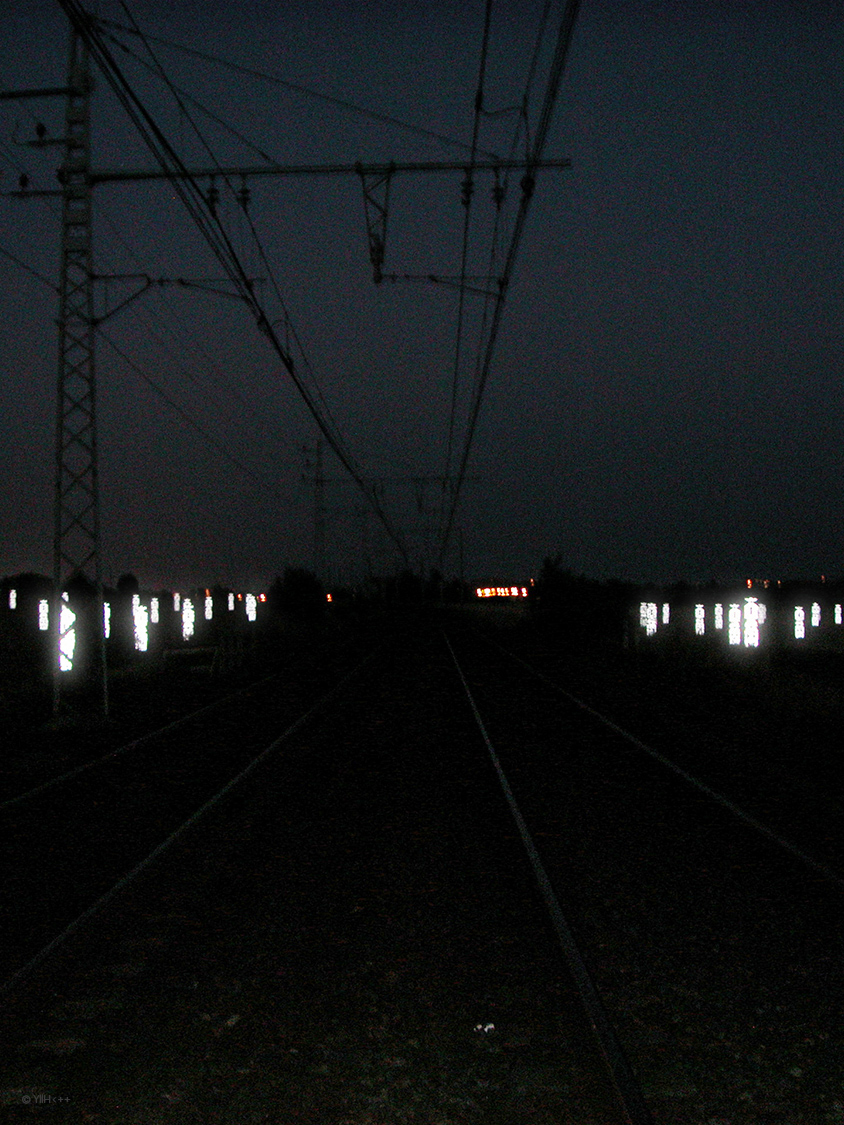
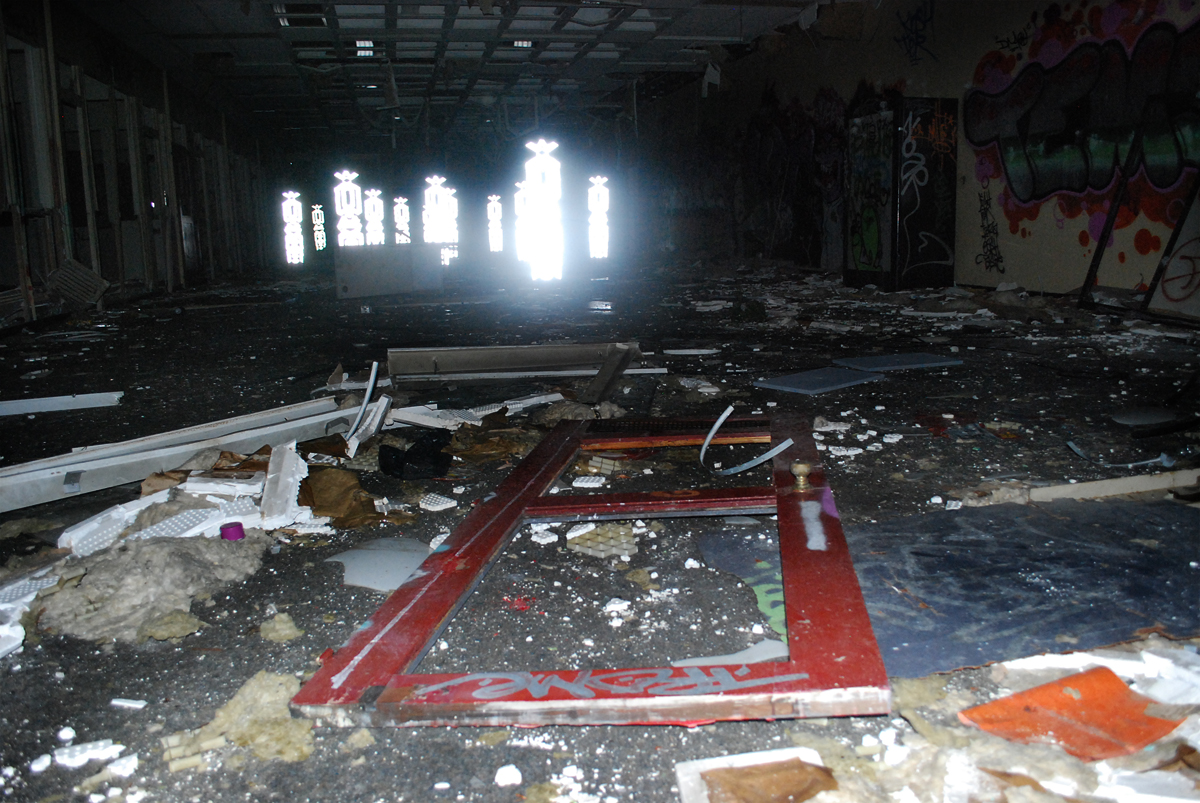
37 / Caterpillar / Install / TTM2LMR / < une nuit, un matin > / Toulouse / 2010 / © YllH <++

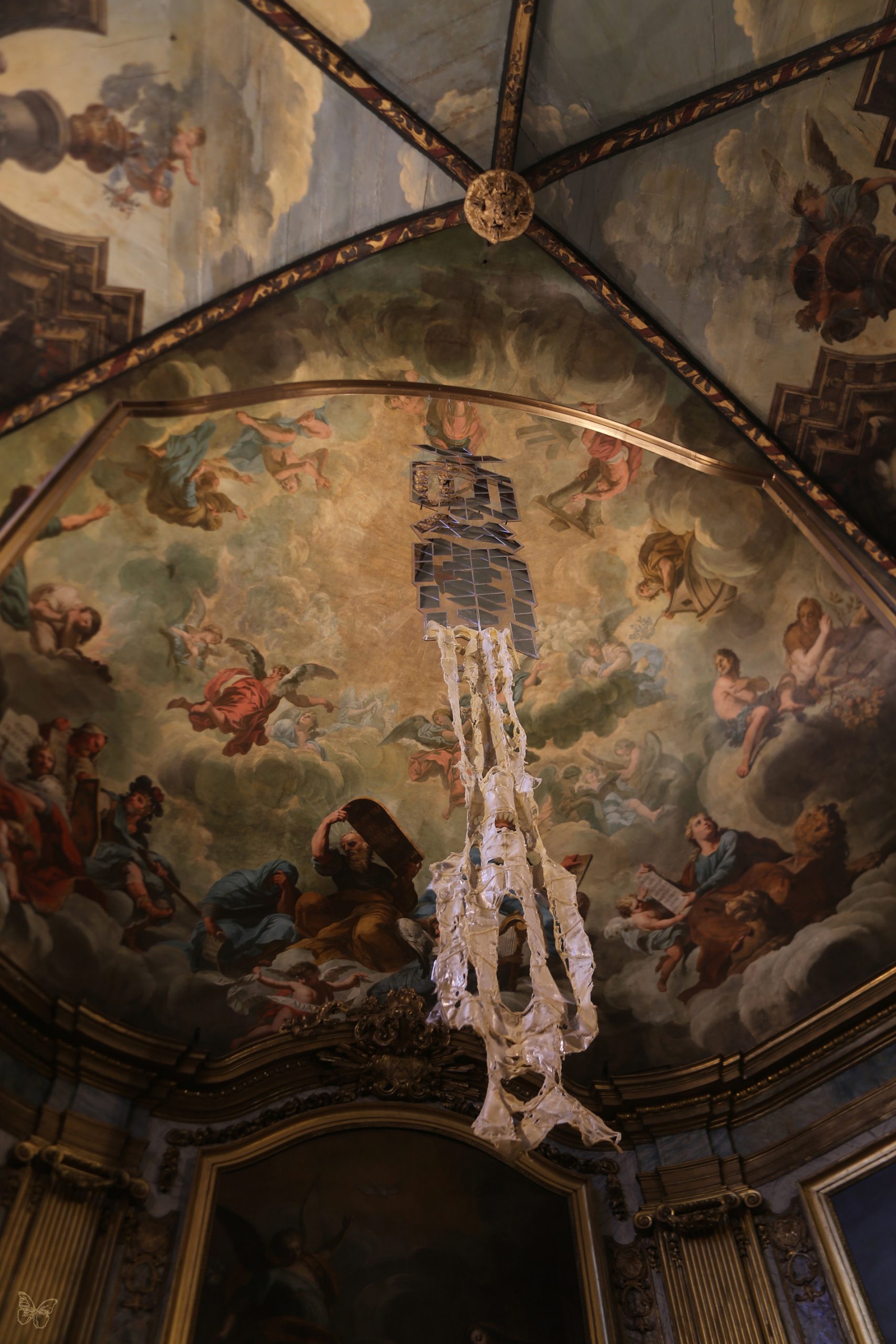
< ICARE x1 > Chapelle des Carmélites – installation / performance / January 2018
The Artist – YllH<++
The challenge lies in confronting mystery.
In an era where everything is displayed, detailed, and revealed, the artist protects their anonymity and disappears behind their artistic creations. Constantly in motion and in pursuit of absolute freedom, the artist remains deliberately invisible, shunning labels by adopting different identities for each artistic intervention.
The artist identifies with Martin Bethenod’s view that, by expressing resistance to the tyranny of the visible and the immediate, the artwork becomes a realm of mystery—of the elusive, of what Marcel Duchamp called “secret noise.”
Prolific and multidisciplinary, the artist has been occupying various territories for over thirty years, working across multiple dimensions: the visible and the invisible, the interplay of light and darkness, the urban environment, the wild versus the institutional, and the real versus the virtual.
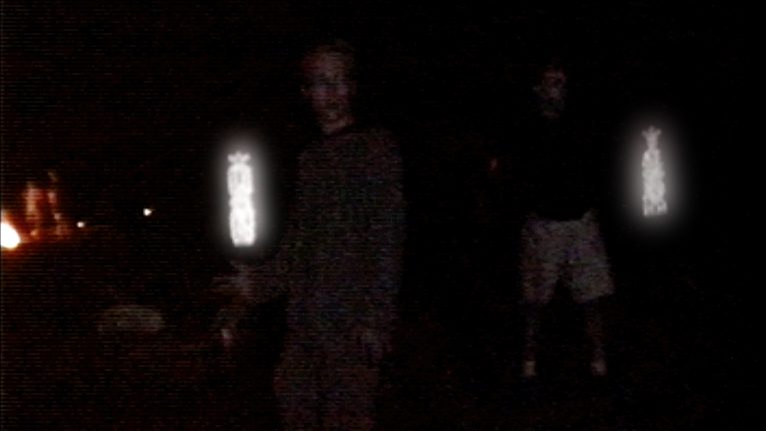
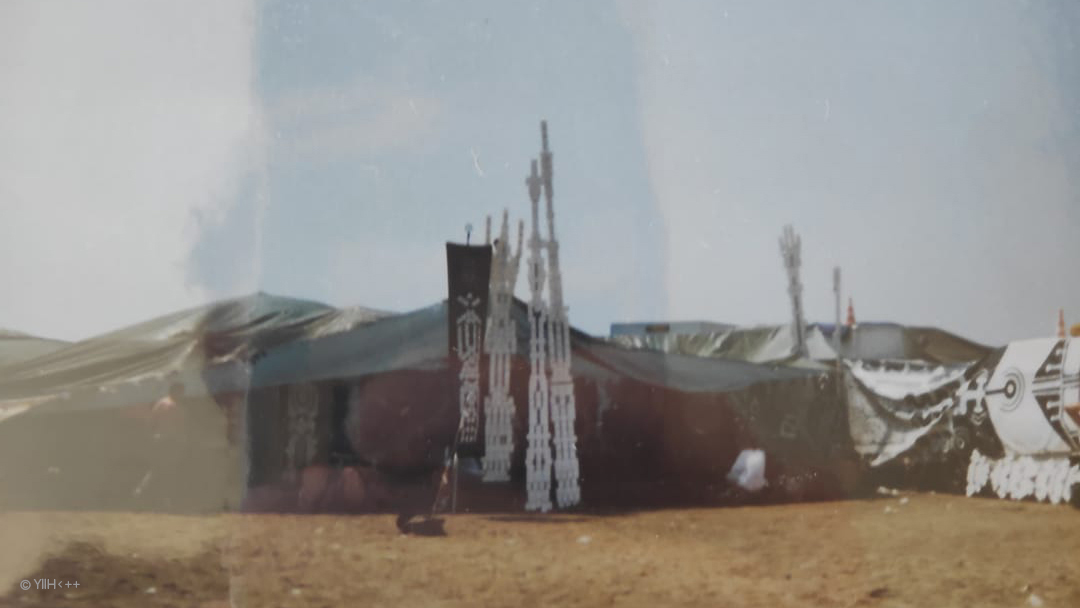
Teknival Tarnos / summer 1994 / © YllH <++
In the 1990s, the artist evolved within the electronic music and sound system scenes, becoming a key figure in the techno world—alongside Spiral Tribe and independent labels— developing visual creations, kinetic installations, “dream machines,” videos, and sound compositions presented at “teknivals” across Europe.
It was during this period that the first “light totems” emerged: peaceful entities with stylized geometric forms, referencing Gilles Deleuze’s concept of “body without organs.”
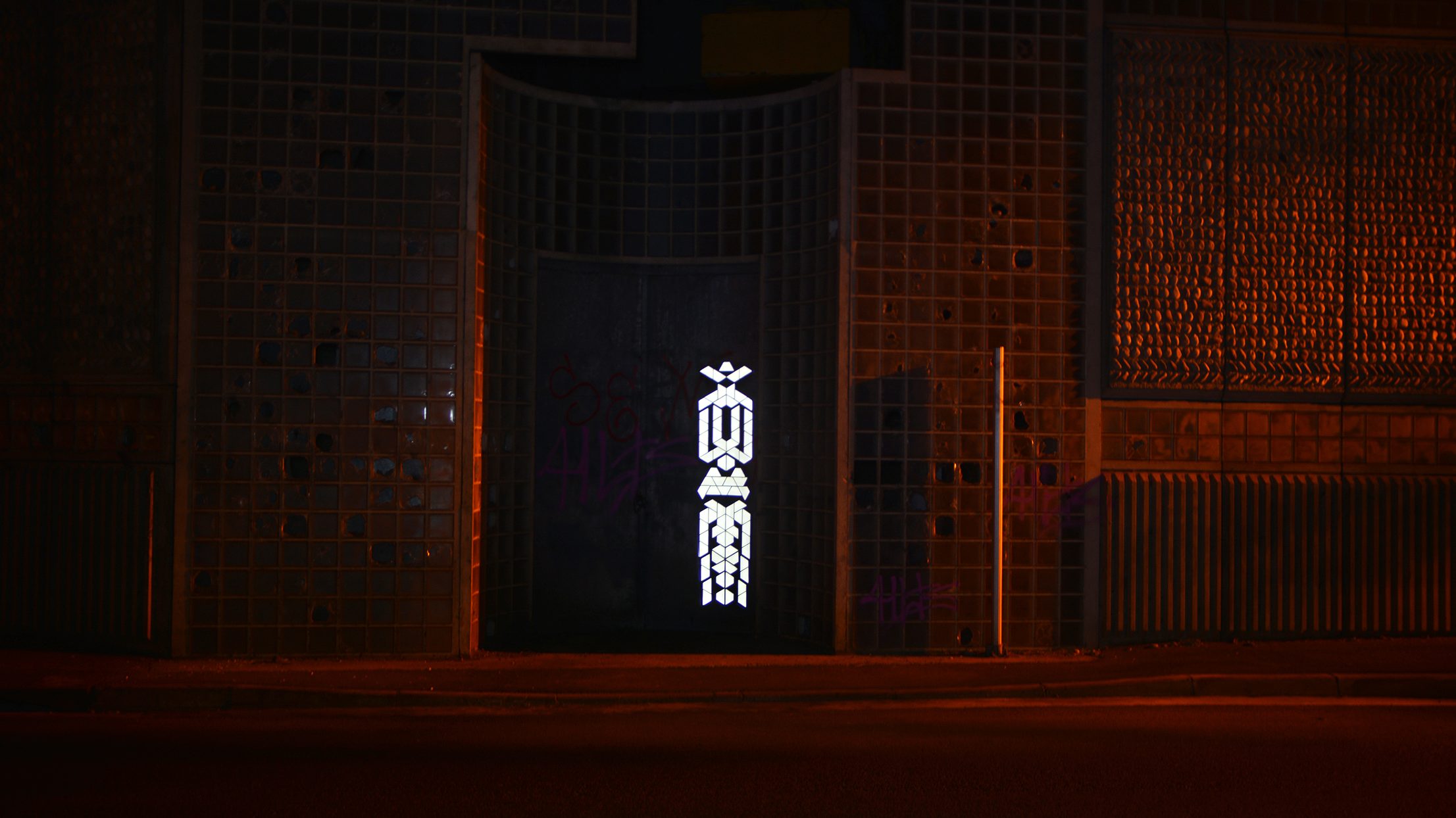
These ephemeral appearances are never accidental; rather, they are deliberately chosen within specific space-time contexts—whether in Toulouse, Quimper, Paris, Liechtenstein, Spain, Italy, Kabul, Jerusalem, or virtual galaxies.
A master of camouflage and the invisible [ 1, 2, 3 ], the artist has been secretly carrying out “invasions” </:TT/:CK_> for over 32 years, guided by satellite mapping: urban areas, institutions, road networks, wind farms, and Land art installations on both land and water…
His “light totems” (TTM2LMR)—mythical beings from another dimension—prompt the public to question what they see and to embark on a scavenger hunt to find them. Visitors must search for clues, interact with others to gather information, and decipher riddles—or simply open the door to their imagination and enjoy the present moment.
A politically engaged artist, his artistic creations address the realities of war, but also migrant peoples, as in the collective performances #Crève hivernale that he organised in Toulouse in 2016 in response to the emergency situation facing migrants in Europe.
[ Excerpt from the text by Butterfly – Butterfly Art News ]
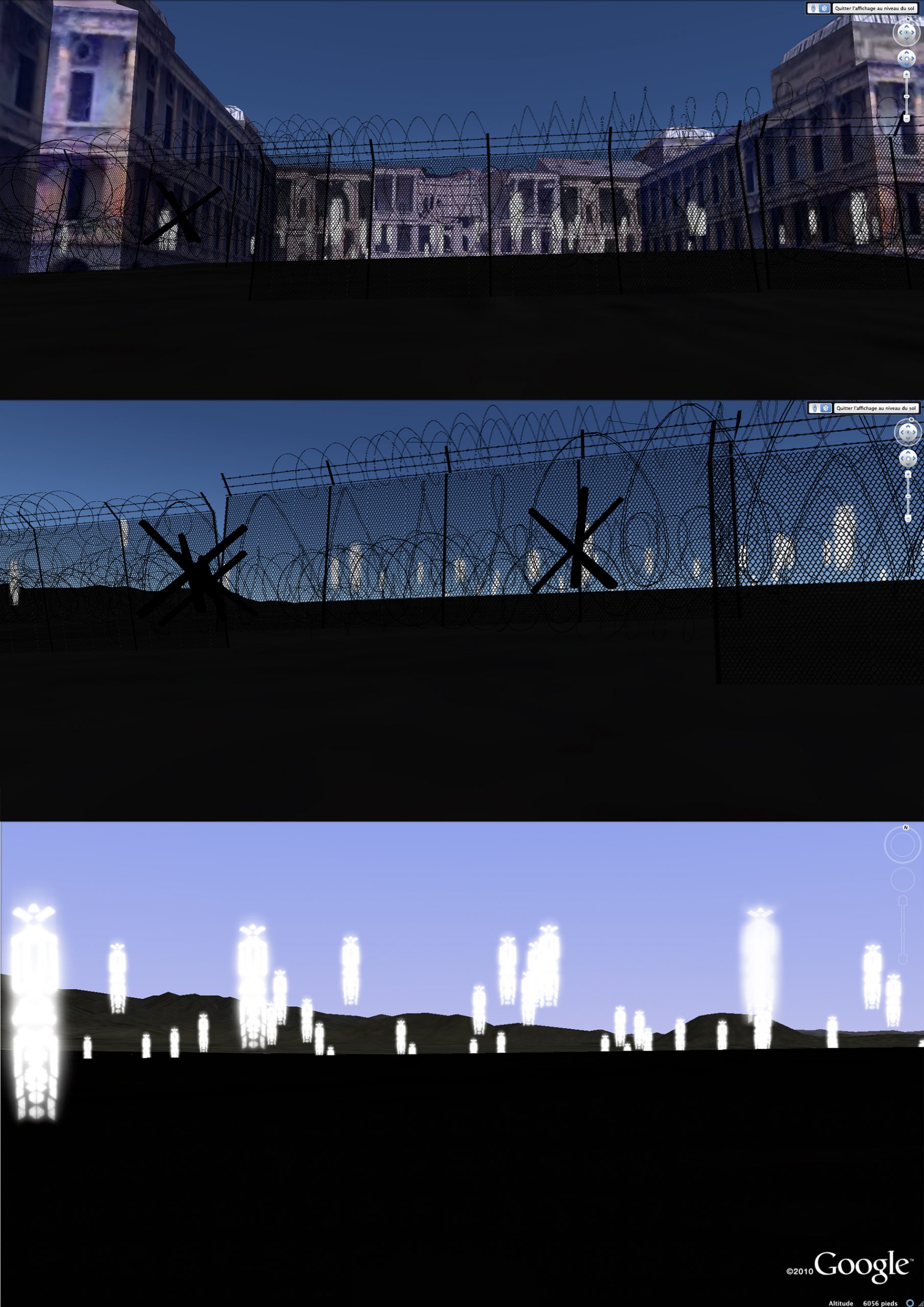
Darulaman, Kabul – AFG GE – pointeur 34°27’54.03’’N – 69°07’08.6’’E / \TT/\CK_\TT/\CK_\TT/\CK_\TT/\CK_2014
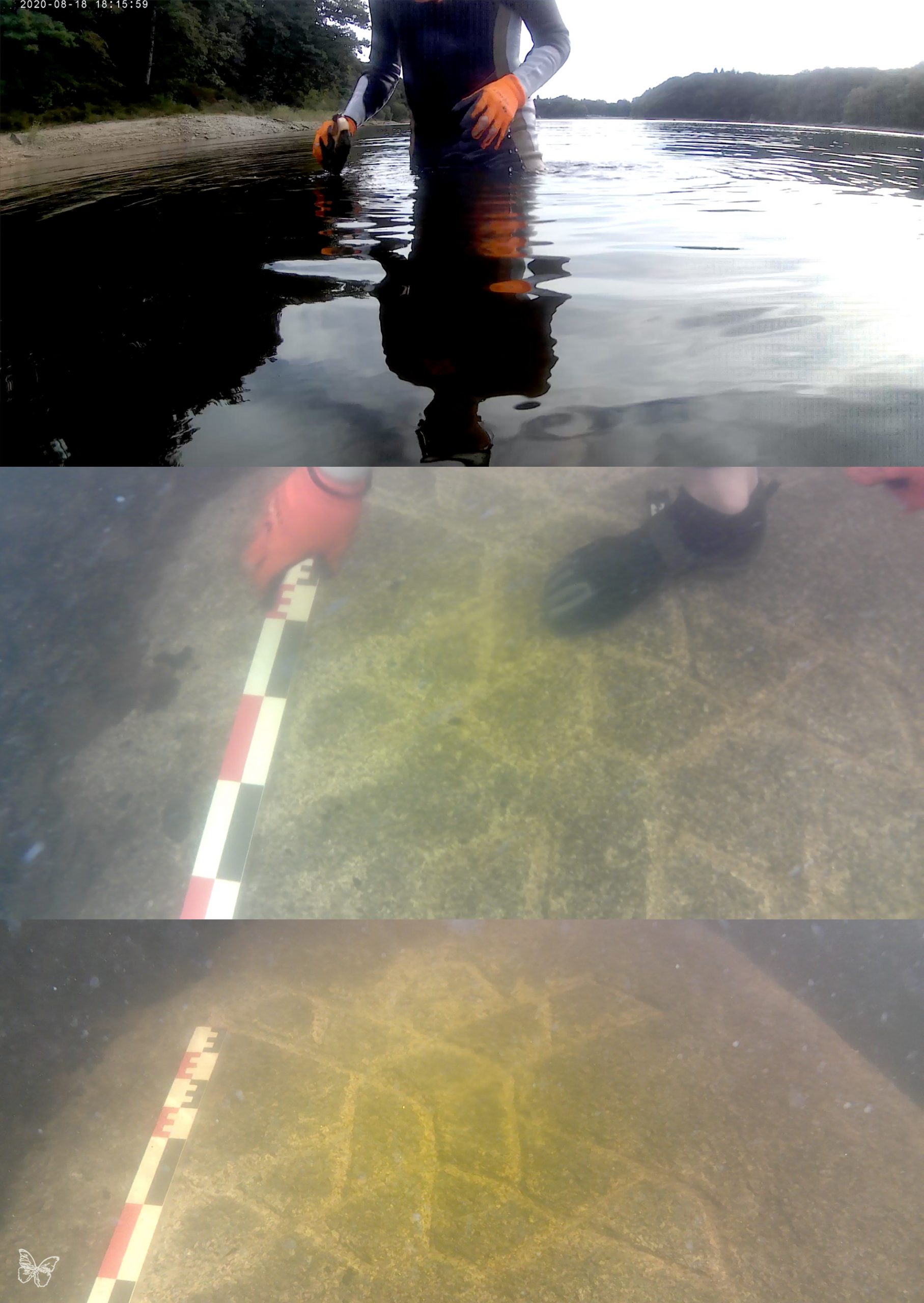
1500/01
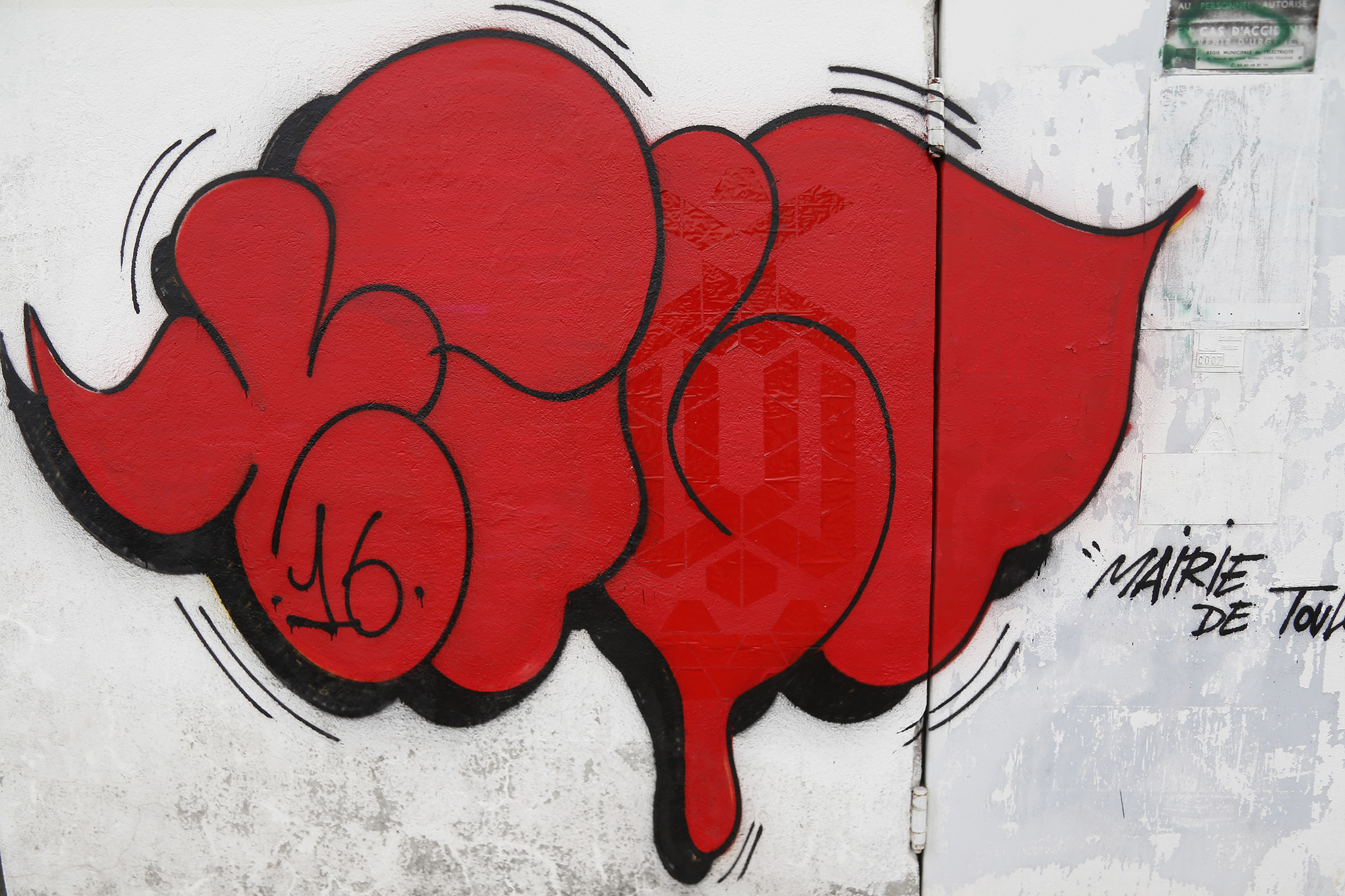
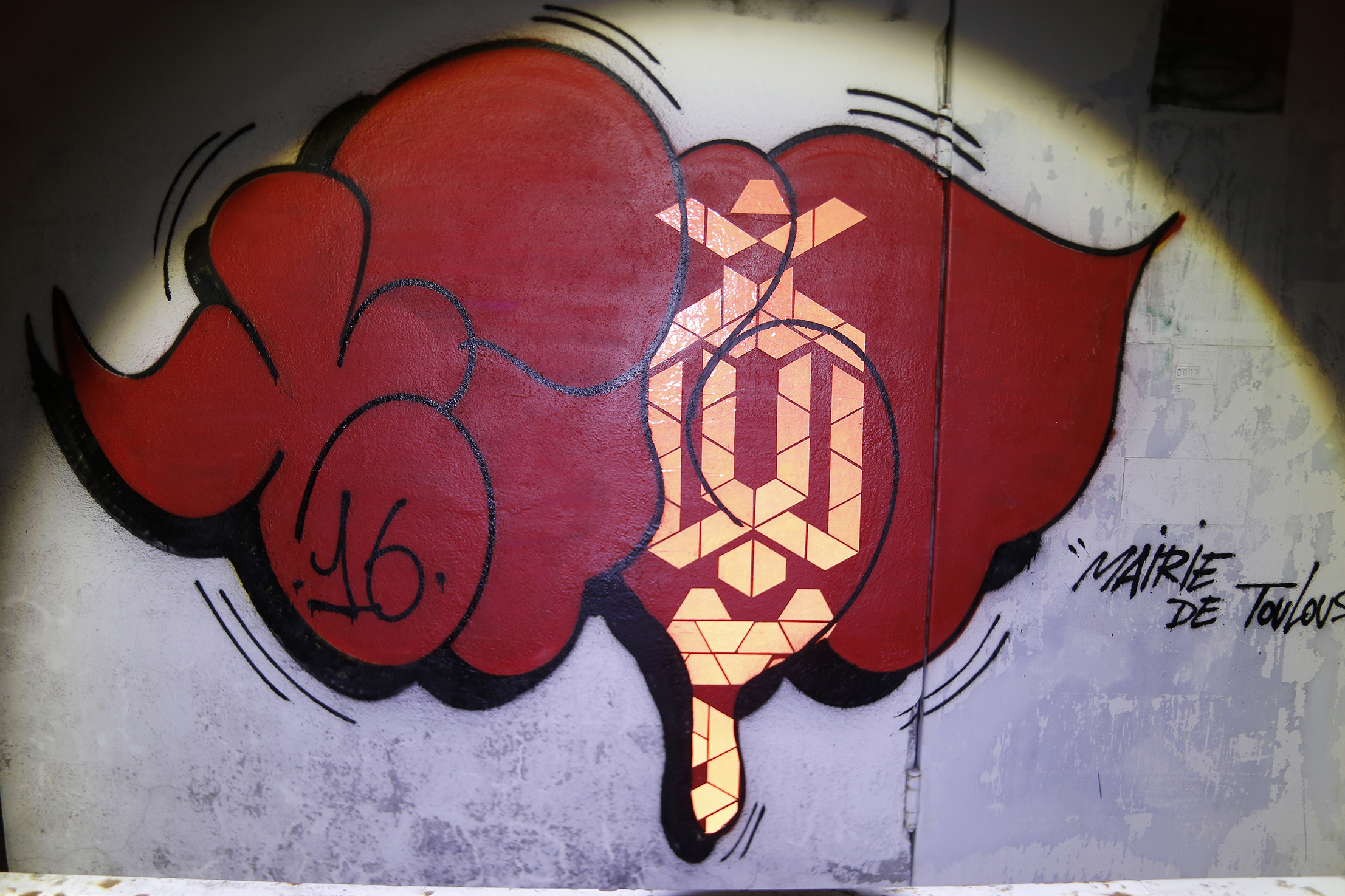
TTM < camo > Tilt vs YllH<++ / < Pink City > Toulouse / © YllH <++
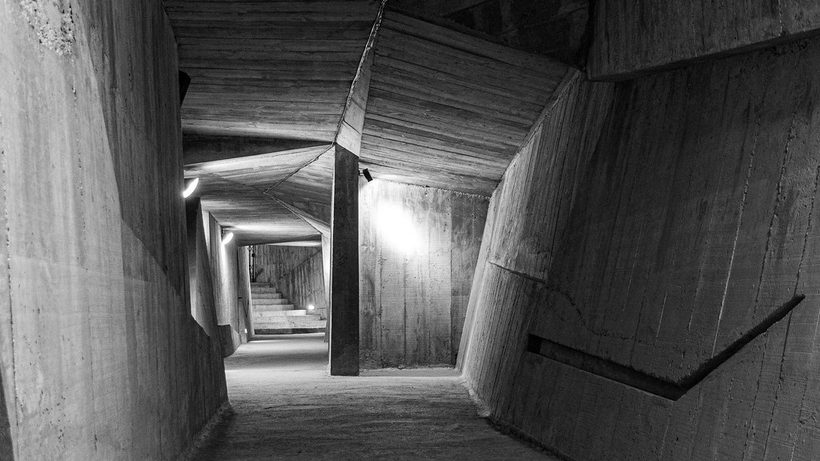
The Monument to the Glory of the Resistance
Inaugurated on August 19, 1971, to mark the 27th anniversary of the Liberation of Toulouse, this is a “total work of art” blending architecture, sculpture, sound, and imagery.
Designated as a Historical Monument in 2016, it is located in the Busca district, near sites marked by World War II—such as Villa Maignac (Gestapo headquarters), Saint-Michel Prison, the Holocaust Memorial, and the Museum of the Resistance and Deportation. The monument stands at the heart of an urban landscape dedicated to remembrance.
A visitor journey between the visible and the invisible
From the moment visitors enter the monument, instructions are provided to ensure optimal 360° spatial navigation.
The visitor experiences a gradual unfolding of the experience.
Architecture, memory and contemporary creation engage in dialogue, amplified by the monument’s dense, underground atmosphere.
An immersive, sensory experience
« If the echo of their voices fades, we shall perish. »
Paul Éluard
The tone is set immediately. There are no display cases or explanatory panels here; the monument invites visitors to experience memory rather than simply contemplate it.
Visitors descend into a sensory tunnel beneath a grass-covered mound.
The route explores three crypts dedicated to refugees, torture victims, and those executed by firing squad. Each evokes the brutality of Nazi repression and pays tribute to local Resistance figures (such as François Verdier and Marcel Langer). Moving between shadow and light, visitors experience an allegorical journey toward Freedom, passing through the Tunnel of Hope to reach the exit.
The entirely underground structure features raw concrete with broken lines and sharp angles. This rugged architecture evokes the tension and precariousness of the Resistance fighters’ underground lives. The path itself is designed to be a straight line.
This “Gesamtkunstwerk”—or total work of art, combining architecture, sculpture, sound, and imagery—transforms every visit into an intimate, emotional, and memorable experience.
Powerful external symbols
“Le Signal” (The Signal): A metal structure by Pierre Debeaux, visible from afar, interpreted as the union of Resistance forces. Comprising four slender metal masts, it embodies the values of Equality, Fraternity, Resistance, and Freedom.
The “Résurrection” Rose: Created in 1975 to commemorate the liberation of the Ravensbrück camp; a symbol of rebirth.
Cobblestone paving: A reminder of revolutionary barricades, linking the Resistance to popular struggles.
1500/01
-r-é-s-i-s-t-a-n-c-e-s- < tout finit par passer >

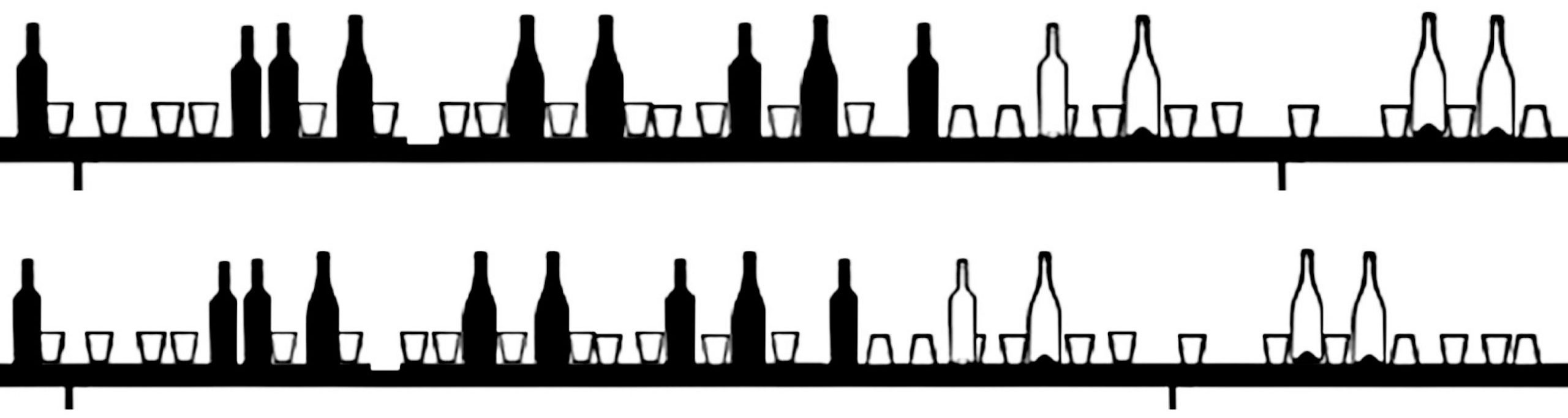
< la ligne noire > < border line > < vin d’honneur > performative installation
starting point for the installations / 5 / 2 October 2026 – 6:30 pm
GPS GE target pointer cible / 43.5918° N, 1.4531° E
Allées Frédéric Mistral – 31400 Toulouse
Free admission
Wednesday to Friday / 2 pm – 6 pm / Saturday and Sunday / 11 am – 6 pm
Guided tours / free / booking required online
Flash Tour (30 min) / Wednesday / Thursday / Friday / 2 pm and 4 pm
/ Saturday / Sunday / 11:30 am, 2:30 pm and 4 pm
Free booking / billetterie.monuments.toulouse.fr
Contact / billetterie.monuments@culture.toulouse.fr
Press contacts / Butterfly Art News / info@butterflyartnews.com
Special thanks / partners
The series of installations was commissioned by the City of Toulouse and is hosted by the MGR – Monument to the Glory of the Resistance.
These artistic installations were made possible thanks to the support of several partners.
We would like to express our gratitude to
Groupe GB for their contribution to the project,
Scierie Alquier for the Black Line for the reception,
Les Vignobles de l’Alaric for the wine from ‘Château de Comigne’,
DeepAudio for the audio and video installations in the monument,
Eight Ball Store for the graphic materials for the ‘vin d’honneur’
Prune Mahé for the project coordination and the communication materials,
Butterfly Art News for media coverage.